Federal Cybersecurity Mandates: What US Businesses Need to Know by Q3 2025

New federal cybersecurity mandates are significantly impacting US businesses by Q3 2025, requiring proactive measures and strategic overhauls to ensure compliance, protect sensitive data, and mitigate growing cyber threats across various sectors.
The landscape of digital defense is shifting dramatically, and by Q3 2025, US businesses will face unprecedented changes. The upcoming federal cybersecurity mandates represent a pivotal moment, demanding immediate attention and strategic adaptation from organizations striving to protect their digital assets and maintain operational integrity.
Understanding the New Federal Cybersecurity Mandates
The impending federal cybersecurity mandates represent a significant overhaul of how US businesses are expected to protect their digital infrastructure and sensitive data. These mandates are not merely suggestions but enforceable regulations designed to bolster national cybersecurity resilience in the face of escalating global threats. They aim to establish a baseline of security practices that all covered entities must adhere to, moving beyond voluntary frameworks to compulsory compliance.
This proactive stance by the federal government reflects a growing recognition that cybersecurity is not just an IT department’s concern, but a critical business imperative with national security implications. The mandates are expected to standardize reporting requirements, enhance incident response capabilities, and promote a culture of continuous security improvement across various industries. Businesses need to grasp the full scope of these changes to avoid non-compliance penalties and bolster their defenses effectively.
Key Regulatory Bodies and Their Roles
Several government agencies are instrumental in shaping and enforcing these new mandates. Understanding their respective roles is crucial for businesses to navigate the regulatory landscape.
- CISA (Cybersecurity and Infrastructure Security Agency): CISA is at the forefront, providing guidance, resources, and technical assistance to critical infrastructure sectors. Their role is largely proactive, focusing on threat information sharing and vulnerability management.
- NIST (National Institute of Standards and Technology): NIST frameworks, like the Cybersecurity Framework, often serve as the foundation for federal mandates due to their comprehensive and flexible nature. While NIST doesn’t enforce, its standards are frequently adopted by regulatory bodies.
- Sector-Specific Agencies: Agencies such as the Department of Health and Human Services (HHS) for healthcare, or the Department of Energy (DOE) for energy, will likely issue sector-specific rules that build upon the overarching federal mandates, tailoring them to unique industry risks.
Each of these bodies contributes to a layered regulatory environment, making it essential for businesses to identify which agencies have jurisdiction over their specific operations and data types. The mandates are designed to be comprehensive, ensuring that no critical sector is left vulnerable.
In essence, these new federal cybersecurity mandates are poised to redefine the responsibilities of US businesses concerning digital security. Their pervasive influence will necessitate a thorough review of existing security policies, a potential overhaul of technological infrastructure, and a significant investment in employee training and awareness. The goal is a more secure and resilient digital ecosystem for the entire nation.
The Impetus Behind the Mandates: Why Now?
The timing of these new federal cybersecurity mandates is not arbitrary; it’s a direct response to a rapidly evolving and increasingly dangerous cyber threat landscape. Over the past few years, the frequency, sophistication, and impact of cyberattacks have reached unprecedented levels, posing significant risks to both national security and economic stability. High-profile breaches affecting critical infrastructure, supply chains, and sensitive government data have underscored systemic vulnerabilities that voluntary compliance alone has failed to adequately address.
From ransomware attacks paralyzing essential services to state-sponsored espionage targeting intellectual property, the digital battleground is expanding. The federal government recognizes that a fragmented approach to cybersecurity leaves the nation susceptible. These mandates are a strategic effort to establish a unified front, ensuring a minimum standard of defense across all sectors deemed critical to national well-being. This proactive legislative push aims to pre-empt future attacks by hardening the collective digital perimeter.
Escalating Cyber Threats and Their Impact
The sheer volume and diversity of cyber threats have compelled this regulatory shift. Businesses are no longer just fending off opportunistic hackers; they face organized criminal syndicates and sophisticated nation-state actors.
- Ransomware Epidemics: Attacks like Colonial Pipeline highlighted the devastating real-world consequences of cyberattacks on critical infrastructure. These incidents can disrupt fuel supplies, healthcare services, and food distribution, impacting millions.
- Supply Chain Vulnerabilities: The SolarWinds attack demonstrated how a single point of compromise in the supply chain can ripple through countless organizations, exposing sensitive data and undermining trust in widely used software.
- Data Breaches and Intellectual Property Theft: Constant attempts to exfiltrate proprietary information and personal data lead to massive financial losses, reputational damage, and erosion of consumer trust.
These incidents have not only incurred billions in damages but have also eroded public confidence in the ability of organizations to protect their information. The government’s intervention is seen as a necessary step to restore this confidence and safeguard essential services.
Moreover, geopolitical tensions often manifest in cyber warfare, with critical infrastructure being a primary target. The federal government is taking decisive action to ensure that US businesses are not unwitting pawns or vulnerable targets in these larger conflicts. The mandates are a clear signal that cybersecurity is now a shared responsibility, with significant consequences for those who fail to meet the new baseline.
Key Components of the Upcoming Mandates
While the precise details of all federal cybersecurity mandates are still being finalized, several core components are expected to form the backbone of these new regulations. Businesses should anticipate requirements that address incident reporting, risk management, data protection, and supply chain security. These components reflect a holistic approach to cybersecurity, aiming to strengthen defenses at every layer of an organization’s digital ecosystem.
The goal is to move beyond reactive measures and instill a proactive, risk-aware culture. Companies will need to not only implement specific technical controls but also demonstrate ongoing vigilance and adaptability to emerging threats. This means a significant shift in how many organizations currently approach cybersecurity, making it an integral part of their operational and strategic planning.
Mandatory Incident Reporting
One of the most critical aspects of the new mandates will undoubtedly be mandatory incident reporting. This requires businesses to promptly disclose cyber incidents to relevant federal authorities.
- Timelines: Expect strict deadlines for reporting, potentially within hours or a few days of discovery, depending on the severity and nature of the incident.
- Scope: Reporting obligations will likely cover a broad range of incidents, from significant data breaches to ransomware attacks and disruptions to critical services.
- Purpose: The aim is to enable federal agencies to gain a comprehensive understanding of the threat landscape, share intelligence, and coordinate national responses more effectively.
Early and accurate reporting is vital for national cybersecurity. It allows for rapid threat intelligence sharing, helping other potentially affected organizations to bolster their defenses against similar attacks. Failure to report within specified timelines could lead to significant penalties, emphasizing the importance of robust incident response plans.
Enhanced Risk Management Frameworks
Businesses will be required to adopt or enhance their existing risk management frameworks to align with federal standards. This involves a systematic process of identifying, assessing, and mitigating cybersecurity risks.
This component often draws heavily from frameworks like NIST’s Cybersecurity Framework, which advocates for identifying assets, protecting them, detecting incidents, responding effectively, and recovering swiftly. Organizations will need to conduct regular risk assessments, implement appropriate security controls based on those assessments, and continuously monitor their effectiveness. This isn’t a one-time task but an ongoing commitment to managing risk.
Moreover, the mandates will push for greater accountability at the executive level, ensuring that cybersecurity risk is treated as a core business risk rather than solely an IT issue. This means boards and senior leadership will need to be actively involved in understanding and approving cybersecurity strategies and investments. The comprehensive nature of these requirements will demand significant resources and strategic planning from businesses across the US.
Impact on US Businesses: Challenges and Opportunities
The introduction of new federal cybersecurity mandates by Q3 2025 will undoubtedly present both significant challenges and unique opportunities for US businesses. While the immediate focus will be on achieving compliance and avoiding penalties, forward-thinking organizations will also recognize the strategic advantages that robust cybersecurity can offer. The impact will be felt across all sectors, from small businesses grappling with limited resources to large enterprises needing to overhaul complex legacy systems.
The challenges primarily revolve around the financial investment required, the technical complexities of implementation, and the need for skilled personnel. However, these very challenges can pave the way for opportunities in market differentiation, enhanced customer trust, and improved operational resilience. Businesses that embrace these mandates not just as obligations but as strategic imperatives will be better positioned for long-term success in an increasingly digital world.
Compliance Costs and Resource Allocation
One of the most immediate challenges will be the cost of compliance. Implementing new security controls, upgrading infrastructure, and training staff will require substantial financial investment.
- Technology Upgrades: Many businesses will need to invest in advanced security tools, such as Security Information and Event Management (SIEM) systems, Endpoint Detection and Response (EDR), and robust data encryption solutions.
- Personnel and Training: There’s a severe shortage of cybersecurity professionals. Companies will either need to hire new talent or significantly upskill their existing IT teams, both of which come with considerable costs.
- Consulting and Auditing: Engaging third-party consultants to assess compliance gaps and perform regular audits will become a standard practice, adding to operational expenses.
Small and medium-sized businesses (SMBs) might find these costs particularly burdensome, potentially requiring federal assistance programs or simplified compliance pathways. Resource allocation will be a critical strategic decision, balancing immediate compliance needs with long-term security posture improvements.
Competitive Advantage and Trust Building
Beyond the challenges, the mandates offer a significant opportunity for businesses to gain a competitive edge and build stronger trust with their customers and partners.
Companies that proactively comply and go beyond the minimum requirements can market their superior security posture as a differentiator. In an era where data breaches are common, demonstrating a strong commitment to data protection can attract and retain customers. Furthermore, robust cybersecurity can streamline partnerships, as businesses will increasingly prefer to work with vendors who meet high security standards, reducing overall supply chain risk. This shift transforms cybersecurity from a cost center into a value driver, enhancing brand reputation and fostering resilience in the marketplace.
Preparing for Compliance: A Strategic Roadmap
With Q3 2025 rapidly approaching, US businesses must develop a strategic roadmap for compliance with the new federal cybersecurity mandates. Procrastination is not an option, as the scope of changes will likely be extensive, requiring significant planning, resource allocation, and execution. A well-defined strategy will not only ensure adherence to regulations but also strengthen overall security posture, protecting against future threats.
This roadmap should involve a multi-faceted approach, encompassing technical implementations, policy revisions, employee training, and continuous monitoring. It’s crucial for organizations to view compliance not as a one-time project but as an ongoing commitment to security excellence. Starting early allows for a phased approach, minimizing disruption and maximizing effectiveness.
Conducting a Comprehensive Gap Analysis
The first critical step is to understand where your organization currently stands in relation to the anticipated mandates. A comprehensive gap analysis will identify existing strengths and, more importantly, highlight areas of non-compliance.
- Framework Mapping: Map current security controls and practices against known federal frameworks (e.g., NIST CSF) that are likely to inform the new mandates.
- Asset Inventory: Understand all critical assets, data types, and systems that fall under the scope of the mandates. This includes hardware, software, cloud services, and third-party integrations.
- Vulnerability Assessment: Perform thorough vulnerability scans and penetration testing to identify exploitable weaknesses in your systems and applications.
This analysis provides a baseline, allowing businesses to prioritize remediation efforts and allocate resources effectively. It’s an essential diagnostic tool that informs every subsequent step in the compliance journey.
Implementing and Updating Security Controls
Based on the gap analysis, businesses will need to implement new security controls and update existing ones. This often involves both technological solutions and process improvements.
This could range from enhancing access controls through multi-factor authentication (MFA) and implementing robust data encryption to deploying advanced threat detection systems and establishing secure configuration baselines. Moreover, policies and procedures related to incident response, data handling, and vendor management must be revised to align with the new regulatory requirements. Regular audits and continuous monitoring will be vital to ensure these controls remain effective and compliant over time. The goal is to build a resilient security architecture that not only meets federal requirements but also robustly defends against evolving cyber threats.
The Role of Technology and Automation in Compliance
As US businesses brace for the impact of federal cybersecurity mandates by Q3 2025, the strategic deployment of technology and automation will be paramount for achieving and maintaining compliance. Manual processes simply cannot keep pace with the complexity and scale of modern cybersecurity requirements. Leveraging advanced tools and automated solutions can significantly streamline compliance efforts, reduce human error, and provide the continuous visibility necessary to meet stringent regulatory demands.
From automated vulnerability scanning to AI-powered threat detection, technology offers scalable solutions that can help organizations monitor their environments, enforce policies, and generate the detailed reports required by federal agencies. Embracing these technological advancements is not just about efficiency; it’s about building a more resilient and adaptable security posture capable of meeting the demands of the new regulatory landscape.
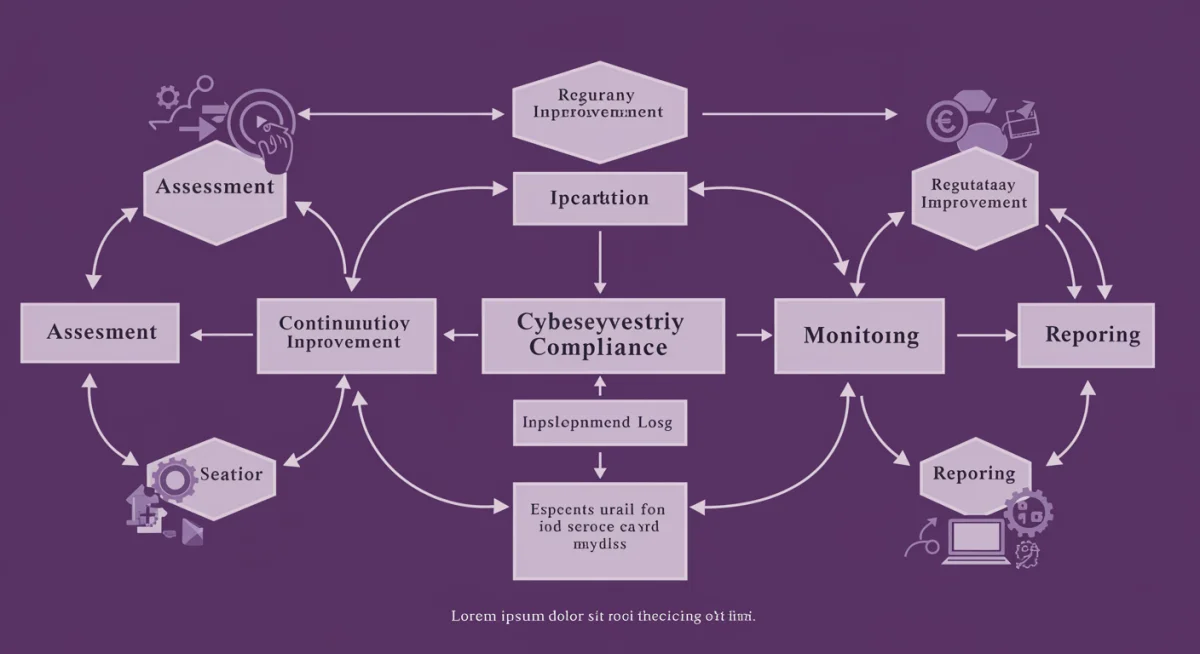
Automated Compliance and Reporting Tools
Automated tools can revolutionize how businesses approach compliance, transforming what was once a laborious manual task into a continuous, integrated process.
- GRC Platforms: Governance, Risk, and Compliance (GRC) platforms can centralize compliance efforts, automating policy enforcement, risk assessments, and audit trails. They provide a single pane of glass for managing various regulatory requirements.
- Security Information and Event Management (SIEM): SIEM systems aggregate and analyze security logs from across an organization’s network, automatically detecting anomalies and generating alerts for potential incidents, which is crucial for mandatory incident reporting.
- Automated Penetration Testing Tools: These tools can regularly scan for vulnerabilities and misconfigurations, identifying weaknesses before attackers can exploit them, ensuring continuous adherence to security standards.
These tools not only enhance the accuracy and speed of compliance but also free up valuable human resources to focus on more strategic security initiatives. The ability to generate comprehensive, auditable reports automatically will be a critical advantage under the new mandates.
AI and Machine Learning for Threat Detection
The sheer volume of cyber threats makes manual detection increasingly difficult. Artificial intelligence (AI) and machine learning (ML) are becoming indispensable for proactive threat identification and response.
AI/ML algorithms can analyze vast datasets of network traffic, user behavior, and threat intelligence to identify patterns indicative of malicious activity that would evade traditional signature-based detection systems. They can detect zero-day exploits, insider threats, and sophisticated phishing attempts in real-time, providing an essential layer of defense. Integrating AI/ML into security operations centers (SOCs) allows businesses to move from reactive incident response to proactive threat hunting, significantly enhancing their ability to comply with mandates focused on continuous monitoring and rapid response. These advanced technologies are not just tools; they are strategic assets in the fight against cybercrime and a key enabler for robust compliance.
Long-Term Strategy and Continuous Improvement
Adhering to the new federal cybersecurity mandates by Q3 2025 is not a one-time achievement but rather an ongoing journey that demands a commitment to long-term strategy and continuous improvement. The cyber threat landscape is dynamic, with new vulnerabilities and attack methods emerging constantly. Therefore, a static approach to compliance will inevitably lead to obsolescence and exposure to risk. Businesses must embed a culture of perpetual vigilance and adaptation into their operational DNA to stay ahead of evolving threats and regulatory changes.
This involves establishing mechanisms for regular review, feedback, and enhancement of security controls and policies. It also means fostering a security-aware workforce that understands its role in maintaining the organization’s defensive posture. The goal is to build a resilient and adaptive cybersecurity program that not only meets current mandates but is also prepared for future challenges.
Regular Audits and Assessments
To ensure sustained compliance and effectiveness, regular audits and assessments are indispensable. These processes provide an objective evaluation of the organization’s security posture and identify areas for improvement.
- Internal Audits: Conduct periodic internal reviews of security controls, policies, and procedures to ensure they are being followed and remain effective.
- External Assessments: Engage independent third parties to perform security audits, penetration testing, and compliance assessments. External perspectives can uncover blind spots and provide valuable insights.
- Compliance Reporting: Establish a robust system for generating and submitting compliance reports to relevant federal agencies, demonstrating adherence to all mandated requirements.
These activities are crucial for identifying gaps before they can be exploited by adversaries and for demonstrating due diligence to regulators. They form the feedback loop necessary for continuous improvement.
Fostering a Security-Aware Culture
Technology and processes alone are insufficient without a strong human element. Fostering a security-aware culture across the entire organization is a cornerstone of long-term cybersecurity strategy.

This means moving beyond annual training sessions to continuous education, phishing simulations, and clear communication about emerging threats. Every employee, from the executive suite to the front lines, must understand their role in protecting sensitive information and adhering to security protocols. A strong security culture reduces the likelihood of human error, which remains one of the leading causes of data breaches. By prioritizing education and awareness, businesses can transform their workforce into a powerful line of defense, significantly enhancing their overall resilience against cyberattacks and ensuring enduring compliance with federal mandates.
| Key Aspect | Brief Description |
|---|---|
| Mandatory Reporting | Strict deadlines for reporting cyber incidents to federal authorities. |
| Risk Management | Requirement to adopt or enhance frameworks for identifying and mitigating risks. |
| Supply Chain Security | Increased scrutiny and requirements for securing third-party vendors and software. |
| Continuous Improvement | Emphasis on ongoing audits, assessments, and adaptation to evolving threats. |
Frequently Asked Questions About Federal Cybersecurity Mandates
The primary goals are to enhance the national cybersecurity posture, standardize incident reporting, reduce systemic vulnerabilities across critical sectors, and protect sensitive data from escalating cyber threats. They aim to establish a robust baseline of security for all US businesses.
Businesses operating in critical infrastructure sectors (e.g., energy, finance, healthcare, transportation) are expected to be significantly impacted. However, any business handling federal data or involved in government supply chains will also face stringent requirements, regardless of size.
Penalties for non-compliance could include substantial fines, legal repercussions, loss of government contracts, and significant reputational damage. The exact penalties will vary based on the specific mandate and the severity of the violation, emphasizing the need for strict adherence.
Small businesses should start with a thorough risk assessment, prioritize essential security controls, consider leveraging managed security service providers (MSSPs), and utilize resources from CISA and NIST. Focusing on foundational security practices is key.
For many businesses, yes. The mandates will likely necessitate upgrades to existing IT infrastructure, implementation of new security technologies, and potentially a complete overhaul of current cybersecurity policies and incident response plans to meet the higher standards.
Conclusion
The new federal cybersecurity mandates set to impact US businesses by Q3 2025 mark a definitive turning point in the nation’s approach to digital security. While presenting considerable challenges in terms of investment and operational adjustment, these regulations are a necessary response to an increasingly hostile cyber landscape. Proactive engagement, strategic planning, and a commitment to continuous improvement will not only ensure compliance but also transform cybersecurity into a core strength, safeguarding businesses against future threats and fostering greater trust in the digital economy. The time for action is now, as the security of individual enterprises directly contributes to the resilience of the entire nation.