US Government’s Energy Policy Shift: 30% Carbon Reduction by 2030
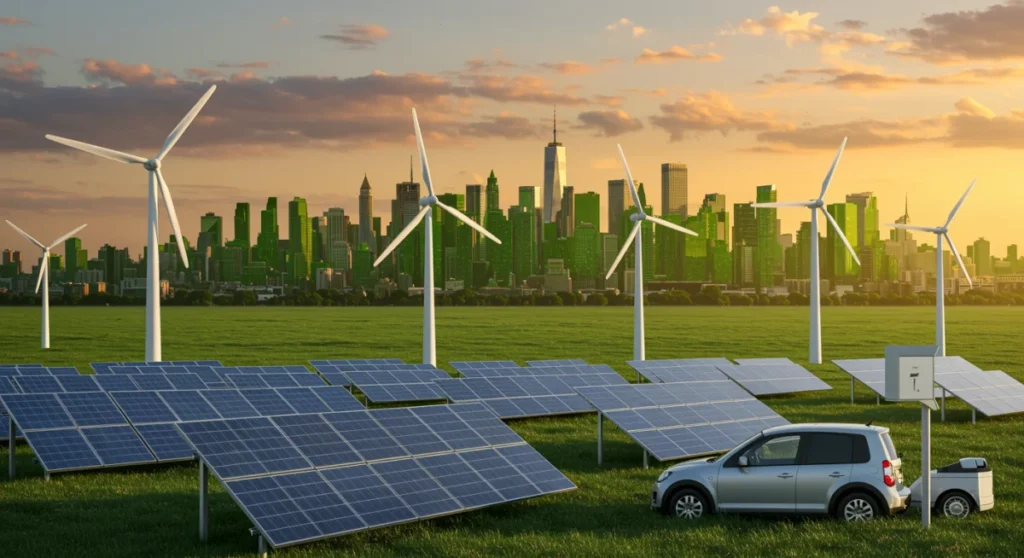
The US government has unveiled a comprehensive energy policy shift targeting a 30% reduction in carbon emissions by 2030, accompanied by a suite of new incentives to drive clean energy adoption nationwide.
The United States government has recently announced a monumental energy policy shift: US Government aims for 30% reduction in carbon emissions by 2030, new incentives announced. This ambitious goal marks a critical turning point in the nation’s commitment to combating climate change and fostering a sustainable future. It’s not just a target; it’s a strategic roadmap designed to transform our energy landscape, encouraging innovation and widespread adoption of cleaner technologies. What does this mean for industries, communities, and individuals across the country?
Understanding the New Carbon Reduction Target
The Biden administration’s commitment to a 30% reduction in carbon emissions by 2030 is a bold declaration, signaling a profound shift in national priorities. This target builds upon previous climate goals and global agreements, demonstrating a concerted effort to accelerate decarbonization across all sectors of the economy. It recognizes the urgency of the climate crisis and the necessity of immediate, impactful action.
Achieving this substantial reduction will require a multi-faceted approach, touching everything from how we generate electricity to how we power our vehicles and heat our homes. The policy framework is designed to provide both the regulatory push and the economic pull needed to transition away from fossil fuels.
The Scientific Imperative Behind the Goal
Scientists globally have consistently warned about the escalating risks of climate change, emphasizing the need for significant greenhouse gas reductions. The 30% target aligns with recommendations from leading climate bodies, aiming to limit global temperature rise and mitigate severe environmental consequences. This goal is not arbitrary; it is rooted in extensive research and climate modeling.
- Intergovernmental Panel on Climate Change (IPCC) reports: Highlighting the need for drastic emission cuts.
- Rising global temperatures: Documenting the accelerating pace of climate change impacts.
- Extreme weather events: Linking increased frequency and intensity to climate change.
- Biodiversity loss: Showing how climate change exacerbates ecological crises.
Economic Implications of Decarbonization
While the initial investment in decarbonization can be substantial, the long-term economic benefits are projected to be immense. This includes the creation of new green jobs, enhanced energy independence, and reduced public health costs associated with pollution. The transition stimulates innovation and competitiveness in emerging clean energy sectors, positioning the U.S. as a leader in the global green economy.
The reduction target is a significant step towards a more sustainable and resilient economy. It provides a clear signal to investors and businesses, encouraging them to direct capital towards clean energy solutions and sustainable practices. This predictable policy environment helps de-risk investments in new technologies and infrastructure.
In essence, the 30% carbon reduction target is a comprehensive strategy that marries environmental necessity with economic opportunity. It sets a clear path for the nation to address climate change head-on, fostering a cleaner, more prosperous future for all Americans.
Key Pillars of the New Energy Policy
The new energy policy supporting the US carbon reduction policy is built upon several critical pillars, each designed to tackle different aspects of emissions reduction and clean energy integration. These pillars work in concert to create a robust framework for achieving the ambitious 2030 goal. From boosting renewable energy generation to enhancing energy efficiency across sectors, the strategy is comprehensive.
The government’s approach is not simply about mandates; it’s about creating an ecosystem where clean energy thrives naturally through economic incentives, regulatory clarity, and strategic investments. This holistic view ensures that progress is made on multiple fronts simultaneously.
Accelerating Renewable Energy Deployment
A cornerstone of the policy is the aggressive promotion and deployment of renewable energy sources such as solar, wind, and geothermal. This involves streamlining permitting processes, investing in grid modernization, and expanding tax credits for renewable energy projects. The aim is to make clean energy the most economically attractive option.
The policy specifically targets the expansion of utility-scale renewable projects, as well as distributed generation, like rooftop solar on homes and businesses. This dual approach ensures that renewable energy becomes accessible and beneficial at all levels of the energy supply chain.
Enhancing Energy Efficiency and Conservation
Reducing energy consumption is just as vital as increasing clean energy production. The policy introduces new standards for energy efficiency in buildings and appliances, alongside programs to encourage conservation practices among consumers and industries. These measures aim to lower overall energy demand, thereby reducing the carbon footprint.
- Building codes updates: Requiring higher efficiency standards for new constructions and renovations.
- Appliance efficiency standards: Setting stricter limits for energy consumption of household and industrial appliances.
- Smart grid technologies: Promoting adoption for better energy management and demand response.
- Public awareness campaigns: Educating consumers on the benefits and methods of energy conservation.
Innovating Carbon Capture and Storage (CCS)
While the primary focus is on preventing emissions, the policy also acknowledges the role of technologies like carbon capture, utilization, and storage (CCUS) for hard-to-abate sectors. Investments in research and development for advanced CCUS technologies are being prioritized, alongside incentives for their commercial deployment. This pragmatic approach recognizes that some industrial processes will continue to produce emissions in the near term.
The policy aims to both reduce the cost and improve the efficiency of CCUS solutions, making them a more viable option for industries that cannot yet fully transition to renewable energy sources. This provides a bridge towards a fully decarbonized economy.
These pillars collectively form a robust strategy for the US government to achieve its ambitious carbon reduction targets. By addressing both the supply and demand sides of energy, and by investing in innovative solutions, the policy sets a strong foundation for a sustainable future.
New Incentives: Driving Clean Energy Adoption
The success of the US carbon reduction policy hinges significantly on the effectiveness of the new incentives designed to accelerate clean energy adoption. Recognizing that regulatory mandates alone may not be sufficient, the government is rolling out a suite of financial and non-financial incentives to make clean energy more accessible, affordable, and attractive for businesses and individuals alike.
These incentives are strategically crafted to overcome existing barriers to adoption, foster innovation, and create new economic opportunities within the clean energy sector. They represent a significant investment in the nation’s sustainable future.
Expanded Tax Credits and Rebates
A cornerstone of the new incentive package is the expansion and extension of tax credits for renewable energy technologies. This includes residential solar installations, electric vehicles, and energy-efficient home improvements. These credits significantly reduce the upfront cost burden, making clean energy options more financially viable for a broader segment of the population.
Furthermore, new rebate programs are being introduced for businesses that invest in clean energy infrastructure, such as commercial solar arrays or industrial energy efficiency upgrades. These rebates provide direct financial assistance, accelerating the return on investment for companies committed to sustainability.
Grant Programs for Research and Development
Innovation is key to long-term decarbonization. The government is significantly increasing funding for grant programs aimed at research and development in cutting-edge clean energy technologies. This includes advancements in battery storage, advanced nuclear energy, green hydrogen production, and direct air capture. These grants support both academic institutions and private companies pushing the boundaries of what’s possible.
- Department of Energy (DOE) initiatives: Focusing on breakthrough energy science and technology.
- Small Business Innovation Research (SBIR) grants: Supporting small businesses in developing clean energy solutions.
- University partnerships: Fostering collaboration between academia and industry for innovative research.
Low-Interest Loans and Loan Guarantees
To facilitate large-scale clean energy projects that often require substantial capital, the policy introduces new low-interest loan programs and loan guarantees. These financial instruments reduce the risk for private lenders, encouraging investment in utility-scale renewable energy farms, modern grid infrastructure, and sustainable manufacturing facilities. This mechanism is crucial for mobilizing the private capital needed for the energy transition.
These diverse incentives are designed to create a powerful pull towards clean energy, making it an economically attractive and strategically sound choice for all stakeholders. The goal is to accelerate the energy transition and achieve the 2030 carbon reduction target efficiently and equitably.
Impact on Industries and the Economy
The US carbon reduction policy and its associated incentives will inevitably have a profound impact across various industries and the broader economy. While some sectors may face challenges in adapting, many others are poised for significant growth and transformation. This shift is not merely an environmental mandate but a catalyst for economic restructuring and innovation.
The transition to a low-carbon economy will redefine competitive landscapes, create new market opportunities, and necessitate workforce retraining and development to meet evolving demands.
Transformation in the Energy Sector
The most direct impact will be felt in the energy sector. Traditional fossil fuel industries will need to accelerate their transition, investing in carbon capture technologies or diversifying into renewable energy. Conversely, the renewable energy sector, including solar, wind, and battery storage, is expected to experience unprecedented growth, attracting substantial investment and creating numerous jobs.
Grid operators will also face the challenge and opportunity of modernizing infrastructure to accommodate a higher penetration of intermittent renewable energy sources, requiring advancements in smart grid technologies and energy storage solutions.
Opportunities in Manufacturing and Technology
The push for clean energy will spur significant growth in manufacturing, particularly for components of renewable energy systems, electric vehicles, and energy-efficient technologies. This could lead to a revitalization of domestic manufacturing, reducing reliance on foreign supply chains and creating high-quality jobs.
- Electric vehicle manufacturing: Increased demand for EVs drives investment in production facilities and battery technology.
- Solar panel and wind turbine component production: Boosting domestic capacity for clean energy hardware.
- Energy storage solutions: Development and manufacturing of advanced battery and other storage technologies.
- Green building materials: Innovation in sustainable construction materials and techniques.
Challenges and Adaptations for Heavy Industries
Heavy industries such as steel, cement, and chemicals, which are typically energy-intensive and difficult to decarbonize, will face significant challenges. The policy will necessitate investments in new processes, electrification, and potentially carbon capture technologies. Government incentives and research grants will be crucial in supporting these industries through their transition, ensuring competitiveness while meeting emission targets.
The overall economic impact is projected to be net positive, with the creation of new green jobs and industries offsetting potential job losses in declining sectors. The policy aims for a just transition, providing support and retraining for workers affected by the shift.
Environmental and Social Benefits
Beyond the economic implications, the US carbon reduction policy promises substantial environmental and social benefits that will improve the quality of life for all Americans. These positive outcomes extend far beyond simply meeting emission targets, creating a healthier, more resilient, and equitable society.
The policy acknowledges the interconnectedness of environmental health, public well-being, and social justice, aiming to deliver benefits that are broadly distributed across communities.
Cleaner Air and Public Health Improvements
Reducing carbon emissions often goes hand-in-hand with decreasing other harmful air pollutants, such as particulate matter, sulfur dioxide, and nitrogen oxides. These pollutants are known to cause respiratory and cardiovascular diseases. A cleaner energy system will lead to significant improvements in air quality, particularly in urban and industrial areas, resulting in better public health outcomes and reduced healthcare costs.
This is especially beneficial for vulnerable populations who often live near polluting facilities and disproportionately suffer from air pollution-related illnesses. The policy aims to address these environmental justice concerns directly.

Enhanced Energy Security and Resilience
Diversifying the energy mix away from volatile fossil fuel markets and towards domestically produced renewable energy sources enhances national energy security. It reduces reliance on foreign energy imports and shields the economy from global price fluctuations. Furthermore, a decentralized energy system with more distributed renewable generation increases grid resilience against extreme weather events and cyber threats.
- Reduced reliance on fossil fuel imports: Strengthening national energy independence.
- Decentralized energy production: Improving grid stability and reducing vulnerability.
- Economic stability: Less susceptibility to global energy market volatility.
Job Creation and Economic Equity
The growth of the clean energy sector is a significant driver of new job creation, often in sectors that offer competitive wages and opportunities for career advancement. These jobs span manufacturing, installation, maintenance, research and development, and various support services. The policy includes provisions for workforce training and development, ensuring that a diverse workforce can access these new opportunities.
By prioritizing investments in disadvantaged communities and ensuring equitable access to clean energy technologies and benefits, the policy also seeks to address historical injustices and promote economic equity. This ensures that the transition benefits all segments of society.
Ultimately, the environmental and social benefits of the new energy policy are far-reaching, contributing to a healthier environment, a more secure energy future, and a more equitable society for generations to come.
Challenges and the Path Forward
While the US carbon reduction policy sets an ambitious and necessary course, its implementation will undoubtedly face significant challenges. Overcoming these hurdles will require sustained political will, technological innovation, economic flexibility, and broad societal cooperation. The path forward is complex but achievable with strategic planning and adaptive measures.
Addressing these challenges proactively is crucial for ensuring the policy’s success and maintaining momentum towards the 2030 target and beyond.
Technological and Infrastructure Hurdles
Integrating a high percentage of intermittent renewable energy sources into the national grid requires substantial upgrades to transmission infrastructure, advancements in energy storage technologies, and sophisticated grid management systems. The scale and speed of these infrastructure developments present considerable technical and logistical challenges.
Scaling up nascent clean energy technologies, such as green hydrogen or direct air capture, from pilot projects to commercial viability will also require significant research, development, and investment to drive down costs and improve efficiency.
Political and Economic Resistance
The transition away from fossil fuels will inevitably encounter political resistance from entrenched interests and economic concerns in communities heavily reliant on traditional energy industries. Ensuring a just transition for these communities, including job retraining and economic diversification programs, will be critical to garnering broad support for the policy.
- Lobbying efforts: Opposition from industries that may be negatively impacted.
- Regional economic disparities: Addressing the unique challenges faced by different states and communities.
- Public perception and acceptance: Communicating the long-term benefits and addressing short-term concerns.
International Cooperation and Global Context
While the US policy is a vital step, climate change is a global challenge that requires international cooperation. The effectiveness of domestic carbon reduction efforts will be amplified by similar actions from other major emitting nations. The US will need to continue its leadership in global climate diplomacy, encouraging ambitious targets and collaborative solutions worldwide.
Navigating these challenges will require a dynamic and adaptable approach, with continuous monitoring, evaluation, and adjustment of policies and incentives. The path forward demands collaboration among government, industry, academia, and civil society.
The Role of Public Engagement and Innovation
The successful implementation of the US carbon reduction policy is not solely dependent on government action and industrial shifts; it also requires significant public engagement and continuous innovation. Empowering citizens and fostering a culture of creativity will be crucial in achieving and sustaining the ambitious 2030 target.
When individuals and communities are actively involved, and when new ideas are constantly being explored, the pace of the energy transition can accelerate dramatically.
Empowering Communities and Individuals
Public awareness campaigns, educational programs, and community-led initiatives play a vital role in encouraging sustainable behaviors and choices. From adopting energy-efficient practices at home to investing in rooftop solar or electric vehicles, individual actions collectively contribute to the larger goal. Local governments and non-profits can serve as catalysts, providing resources and support for community-level climate action.
The policy aims to make clean energy solutions accessible and understandable, ensuring that all Americans can participate in and benefit from the energy transition, regardless of their socioeconomic status or geographic location.
Fostering Technological and Social Innovation
Innovation extends beyond just new technologies; it also encompasses novel approaches to policy design, business models, and social structures that support decarbonization. Encouraging startups, supporting small businesses, and facilitating collaboration between diverse stakeholders can unlock creative solutions to complex energy challenges.
- Open innovation platforms: Creating spaces for crowdsourcing ideas and solutions.
- Public-private partnerships: Collaborating on large-scale demonstration projects and deployment.
- Behavioral science integration: Designing policies that effectively influence sustainable choices.
- Educational reforms: Preparing the next generation with skills for the green economy.
Monitoring Progress and Adaptability
A robust system for monitoring emissions reductions, tracking the deployment of clean energy technologies, and evaluating the effectiveness of incentives will be essential. This data-driven approach allows for timely adjustments to policies and programs, ensuring that the nation remains on track to meet its 2030 target. The policy is designed to be dynamic, capable of adapting to new scientific understanding, technological advancements, and unforeseen challenges.
Public engagement and continuous innovation are indispensable components of the US government’s strategy to reduce carbon emissions. By harnessing collective action and creative problem-solving, the nation can build a sustainable and prosperous future.
| Key Policy Area | Brief Description |
|---|---|
| Carbon Reduction Target | Aiming for 30% reduction in US carbon emissions by 2030, a critical step against climate change. |
| Clean Energy Incentives | New tax credits, rebates, grants, and low-interest loans to boost renewable energy and efficiency. |
| Industry Impact | Significant growth in green sectors, transformation for traditional industries, and new job creation. |
| Environmental Benefits | Improved air quality, public health, enhanced energy security, and economic equity for communities. |
Frequently Asked Questions About the New Energy Policy
The primary goal is to achieve a 30% reduction in carbon emissions across the United States by the year 2030. This ambitious target aims to combat climate change, foster a sustainable economy, and position the nation as a leader in clean energy technology and adoption.
The policy includes a range of incentives such as expanded tax credits for renewable energy installations and electric vehicles, new rebate programs for energy-efficient upgrades, increased grant funding for clean energy research and development, and low-interest loans for large-scale projects.
The policy is expected to stimulate significant growth in the clean energy sector, creating new jobs in manufacturing, installation, and research. While traditional energy sectors may face adaptation challenges, the overall economic impact is projected to be positive, fostering innovation and energy independence.
Key environmental benefits include improved air quality, leading to better public health outcomes. Additionally, the policy aims to enhance national energy security by reducing reliance on fossil fuels, and contribute to global efforts to mitigate the impacts of climate change.
Individuals and communities are crucial. Their engagement through adopting energy-efficient practices, investing in residential clean energy, and participating in local initiatives will collectively contribute to the policy’s success. Public awareness and education are vital for widespread adoption and support.
Conclusion
The US government’s announcement of a revised energy policy shift: US Government aims for 30% reduction in carbon emissions by 2030, new incentives announced represents a pivotal moment in the nation’s climate action efforts. This comprehensive strategy, built on robust targets, diverse incentives, and a commitment to innovation, charts a clear course towards a sustainable and prosperous future. While challenges undoubtedly lie ahead, the potential for economic growth, environmental improvement, and enhanced public health underscores the transformative power of this initiative. The success of this ambitious undertaking will depend on sustained collaboration across all sectors—government, industry, academia, and the public—working in concert to realize a cleaner, more resilient United States.