NASA’s New Missions: Bolstering US Space Leadership 2025-2027
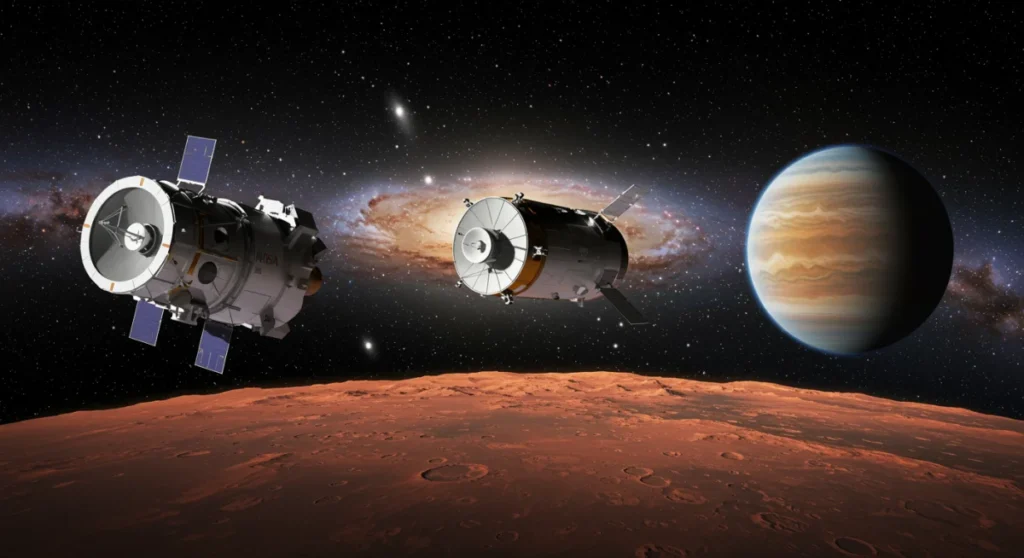
NASA’s announcement of three new missions for 2025-2027 is set to significantly advance space exploration, reinforcing US leadership and pushing the boundaries of scientific discovery.
The universe continues to hold countless mysteries, and humanity’s quest to unravel them is relentless. In a monumental announcement that has reverberated across the scientific community, NASA has unveiled plans for three ambitious new missions scheduled between 2025 and 2027. This strategic move in Space Exploration: NASA Announces 3 New Missions for 2025-2027, Bolstering US Leadership in Space, is poised not only to expand our cosmic understanding but also to significantly reinforce the United States’ preeminent position in the global space race. These endeavors promise to deliver unprecedented insights into planetary science, astrophysics, and the search for life beyond Earth, captivating imaginations and inspiring a new generation of explorers and scientists.
A New Era of Discovery: Overview of NASA’s Strategic Vision
NASA’s recent announcement signals a robust commitment to pushing the frontiers of space exploration, outlining a strategic vision that combines ambitious scientific goals with technological innovation. These three new missions are not merely isolated projects but integrated components of a larger, long-term plan designed to address some of the most profound questions about our universe and our place within it.
The agency’s approach emphasizes a balance between high-risk, high-reward endeavors and foundational research that builds upon decades of accumulated knowledge. This strategy ensures a continuous flow of data and discoveries, maintaining momentum in a field that demands patience and persistent effort. The missions are carefully selected to provide complementary insights, creating a more holistic understanding of various celestial phenomena.
Prioritizing Scientific Return and Technological Advancement
Each mission has been meticulously planned to maximize scientific return, leveraging cutting-edge technology developed by NASA and its partners. The selection process involved rigorous evaluation by expert panels, ensuring that only the most promising and impactful proposals advanced. This commitment to scientific rigor is a hallmark of NASA’s operations.
- Innovative Instrument Design: New sensors and detectors promise unparalleled data resolution.
- Advanced Propulsion Systems: Enabling faster transit times and access to more distant targets.
- Artificial Intelligence Integration: For autonomous decision-making and data analysis in deep space.
- Enhanced Communication Capabilities: Ensuring robust data links across vast cosmic distances.
Beyond the immediate scientific gains, these missions are crucial for fostering technological advancements that often find applications back on Earth. From new materials to advanced computing, the spillover effects of space research are vast and benefit numerous industries, driving economic growth and creating high-tech jobs. This dual benefit underscores the value of sustained investment in space exploration.
In essence, NASA’s strategic vision for 2025-2027 is a testament to its enduring mission: to pioneer the future in space exploration, scientific discovery, and aeronautics research. These new missions are designed to inspire, educate, and push the boundaries of what is possible, ensuring the United States remains at the forefront of this exciting human endeavor.
Mission One: Unveiling the Secrets of Europa’s Ocean
The first of the announced missions sets its sights on Europa, Jupiter’s enigmatic moon, a world believed to harbor a vast subsurface ocean beneath its icy crust. This mission represents a significant step forward in the search for extraterrestrial life, focusing on understanding the potential habitability of this intriguing celestial body. The scientific community has long theorized about Europa’s ocean, and this mission aims to provide definitive answers.
This endeavor will involve a sophisticated orbiter equipped with instruments designed to probe Europa’s ice shell, analyze its plumes, and characterize its ocean’s composition. The data collected will be crucial for determining if the necessary conditions for life—liquid water, energy sources, and essential chemical building blocks—are present within its depths. Such a discovery would fundamentally alter our understanding of life’s prevalence in the universe.
Advanced Instrumentation for Subsurface Exploration
To achieve its ambitious goals, the Europa mission will deploy a suite of highly specialized instruments. These tools are engineered to penetrate the moon’s secrets without directly landing, a complex challenge given Europa’s harsh radiation environment and dynamic surface.
- Ice-Penetrating Radar: To map the thickness and structure of Europa’s ice shell and locate subsurface lakes.
- Thermal Imager: To detect heat signatures from potential hydrothermal vents on the ocean floor.
- Spectrometers: To analyze the chemical composition of plumes erupting from the moon’s surface, seeking organic molecules.
- Magnetometer: To study Europa’s induced magnetic field, providing insights into the ocean’s salinity and depth.
The mission’s design also incorporates robust radiation-hardened electronics, essential for operating in Jupiter’s intense magnetic field. Engineers have spent years developing these technologies, ensuring the spacecraft can withstand the extreme conditions it will encounter. This resilience is vital for mission success and for gathering high-quality data over its operational lifetime.
Understanding Europa’s ocean has profound implications not just for astrobiology but also for planetary science. It could offer clues about the formation and evolution of icy worlds throughout our solar system and beyond. This mission underscores NASA’s pioneering spirit and its commitment to exploring the most promising environments for life beyond Earth.
Mission Two: Martian Climate Evolution and Habitability
The second mission announced by NASA will embark on a detailed study of Mars, specifically focusing on its climate evolution and the factors that have shaped its potential for past or present habitability. While previous missions have provided tantalizing glimpses, this new endeavor aims to deliver a comprehensive understanding of the Red Planet’s atmospheric and geological history, further informing our search for life.
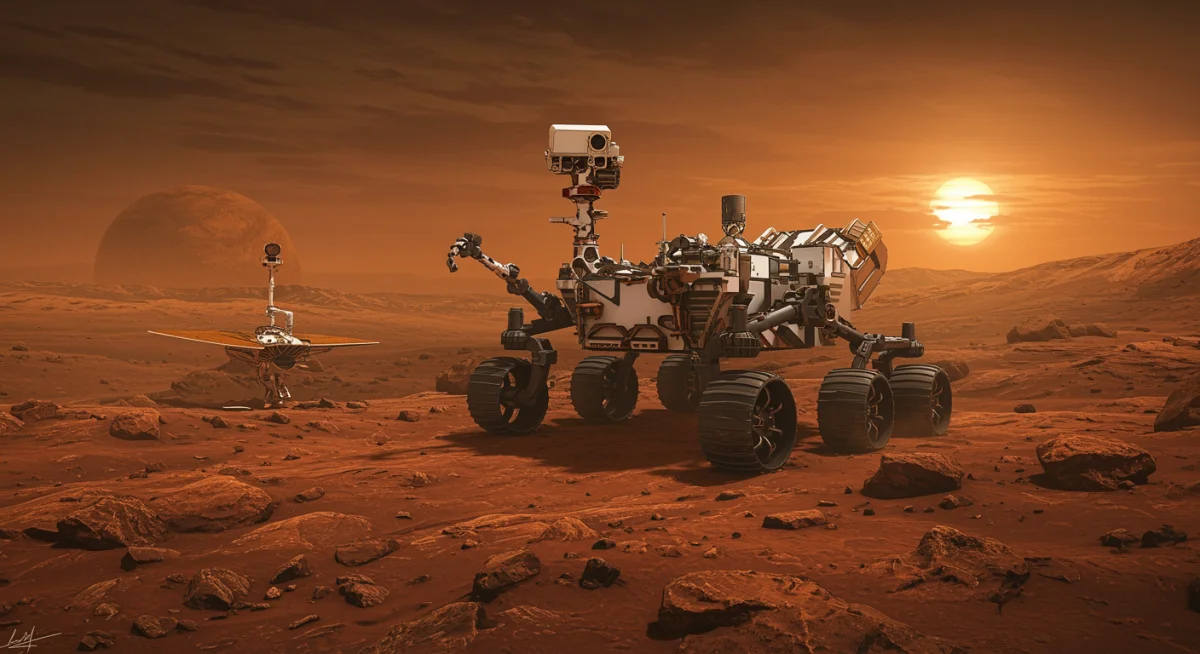
This mission will utilize a next-generation rover, equipped with an array of advanced sensors and drilling capabilities, to explore a geologically diverse region of Mars. The primary objective is to collect and analyze rock and soil samples, searching for biosignatures and evidence of ancient microbial life. Understanding Mars’ past climate will also be critical for future human exploration, providing insights into resource availability and environmental challenges.
Investigating Atmospheric Loss and Water History
A key aspect of the Martian climate mission is to investigate the processes that led to the planet’s significant atmospheric loss and the disappearance of its surface water. Scientists believe Mars once had a much thicker atmosphere and liquid water flowing across its surface, making it potentially habitable.
- Atmospheric Composition Analyzers: To precisely measure trace gases and isotopes, revealing atmospheric escape mechanisms.
- Ground-Penetrating Radar: To map subsurface ice deposits and ancient riverbeds, indicating past water presence.
- Mineralogical Spectrometers: To identify hydrated minerals in rocks, direct evidence of water-rock interactions.
- Environmental Sensors: To monitor current weather patterns and radiation levels, crucial for future human missions.
The rover will also carry a small drone or helicopter for aerial reconnaissance, allowing scientists to survey a much larger area and identify promising sampling sites more efficiently. This aerial component builds on the success of previous Martian helicopters, demonstrating NASA’s continuous innovation in planetary exploration technologies.
By unraveling the story of Mars’ climate evolution, this mission will not only inform our understanding of planetary habitability but also provide invaluable data for comparing Earth’s climate history with that of its nearest planetary neighbor. The insights gained will be instrumental in preparing for the eventual human landing on Mars, a long-term goal for NASA and international partners.
Mission Three: Exoplanet Characterization and Biosignature Hunt
The third mission announced by NASA represents a bold leap into astrophysics, dedicated to the characterization of exoplanets and the ambitious search for biosignatures in their atmospheres. This endeavor moves beyond simply detecting exoplanets to understanding their potential for life, a quest that could redefine our place in the cosmos. The mission aims to observe a diverse range of exoplanets, focusing on those orbiting in their stars’ habitable zones.
This mission will involve a next-generation space telescope, significantly more powerful than its predecessors, designed to directly image exoplanets and analyze the faint light passing through their atmospheres. The goal is to detect chemical indicators, such as oxygen, methane, and water vapor, which could suggest the presence of biological activity. Such a discovery would be one of the most profound in human history, confirming that Earth is not unique in harboring life.
Revolutionary Telescopic Capabilities
To achieve its unprecedented observational goals, the exoplanet characterization mission will deploy a suite of revolutionary technologies, pushing the boundaries of optical and spectroscopic astronomy. The telescope’s design incorporates innovative light-blocking mechanisms and adaptive optics to overcome the glare of distant stars.
- Coronagraph Technology: To block out starlight, allowing direct imaging of fainter exoplanets.
- High-Resolution Spectrographs: To analyze the chemical composition of exoplanet atmospheres with extreme precision.
- Large Aperture Mirror: Maximizing light collection for observing distant, faint targets.
- Precision Pointing Systems: To maintain stable observation of tiny exoplanets over extended periods.
The data collected by this telescope will not only aid in the search for life but also provide crucial information about the formation and evolution of planetary systems far beyond our own. Scientists will be able to study the diversity of exoplanet atmospheres, climates, and geological processes, offering a broader context for understanding our solar system.
The search for biosignatures is a complex and challenging endeavor, requiring meticulous analysis and careful interpretation of data. However, the potential rewards—the confirmation of life beyond Earth—are immense. This mission encapsulates humanity’s innate curiosity and our relentless pursuit of knowledge about the universe and our existence within it.
Bolstering US Leadership in Space: Economic and Geopolitical Impact
NASA’s announcement of these three new missions for 2025-2027 is not just a scientific triumph but also a strategic move to bolster US leadership in space, with significant economic and geopolitical implications. Sustained investment in space exploration positions the United States at the forefront of scientific discovery and technological innovation, reinforcing its global standing. This leadership translates into tangible benefits, both domestically and internationally.
Economically, these missions stimulate growth by fostering innovation in various high-tech sectors, creating jobs, and attracting top talent. The development and execution of complex space projects require a vast network of engineers, scientists, manufacturers, and support staff. This ecosystem drives advancements that often have commercial applications, from new materials to advanced computing and communication technologies, benefiting industries far beyond aerospace.
Inspiring the Next Generation and International Collaboration
Beyond the immediate economic benefits, these ambitious missions serve as a powerful source of inspiration for the next generation of scientists, engineers, and explorers. The allure of space exploration motivates students to pursue STEM fields, ensuring a continuous pipeline of skilled professionals crucial for maintaining technological leadership.
- Educational Outreach Programs: Engaging students with real-time mission updates and scientific discoveries.
- Public Engagement Initiatives: Fostering widespread interest and support for space exploration.
- International Partnerships: Collaborating with other nations, sharing expertise and resources for mutual benefit.
- Technological Spinoffs: New technologies developed for space finding applications in everyday life.
Geopolitically, leading in space exploration demonstrates a nation’s scientific and technological prowess, enhancing its soft power and influence on the global stage. Collaborative missions with international partners also foster diplomatic ties and promote peaceful cooperation, addressing complex challenges that no single nation can tackle alone. The United States’ commitment to these missions signals its dedication to pushing the boundaries of human knowledge for the benefit of all.
The return on investment for space exploration extends far beyond scientific data. It encompasses economic growth, educational enrichment, national prestige, and international collaboration. These new missions are a clear statement of intent, solidifying the US’s foundational role in humanity’s ongoing journey into the cosmos.
Technological Innovations Driving the New Missions
The success of NASA’s three new missions for 2025-2027 hinges on a bedrock of groundbreaking technological innovations. These aren’t merely incremental improvements but revolutionary advancements that enable capabilities previously deemed impossible. From advanced propulsion systems to highly specialized scientific instruments, each mission is a testament to human ingenuity and relentless scientific pursuit. These technologies are the silent heroes, making complex cosmic investigations a reality.
The development cycle for these innovations spans years, involving thousands of engineers and scientists across various disciplines. This collaborative effort ensures that every component, from the smallest sensor to the largest antenna, is optimized for performance and reliability in the unforgiving environment of space. The commitment to pushing technological boundaries is what ultimately allows these ambitious scientific objectives to be met.
Key Technological Breakthroughs Enabling Deep Space Exploration
Several critical technological breakthroughs are central to the operational success and scientific output of these new missions. These innovations represent the cutting edge of aerospace engineering and materials science.
- Miniaturized and Robust Electronics: Enabling more powerful instruments in smaller, radiation-hardened packages.
- Autonomous Navigation and Robotics: Allowing spacecraft and rovers to operate with minimal human intervention over vast distances.
- Advanced Data Processing and Transmission: Handling the enormous volumes of scientific data generated by high-resolution instruments.
- Next-Generation Power Systems: Ensuring long-duration missions with reliable energy sources, such as advanced radioisotope thermoelectric generators (RTGs) or highly efficient solar arrays.
Furthermore, the integration of artificial intelligence and machine learning algorithms is playing an increasingly vital role. These systems can analyze vast datasets onboard, identify anomalies, and even make preliminary scientific interpretations, significantly accelerating the pace of discovery. This autonomy is crucial for missions operating millions or billions of miles from Earth, where communication delays can be substantial.
The cross-pollination of ideas and technologies between different NASA centers and private industry partners is also a major driver of innovation. Companies are often challenged to develop bespoke solutions, which in turn fuels their own research and development, creating a virtuous cycle of technological advancement. These missions, therefore, serve as powerful catalysts for the entire aerospace industry, both public and private.
Challenges and Future Prospects of Space Exploration
While NASA’s new missions for 2025-2027 represent incredible progress, the path of space exploration is inherently fraught with challenges. The vastness of space, extreme environmental conditions, and the immense technical complexity of missions demand constant vigilance, innovative problem-solving, and substantial resources. Overcoming these hurdles is as much a part of the journey as the discoveries themselves.
One of the primary challenges remains funding. Space missions are incredibly expensive, requiring significant long-term investment that can be vulnerable to shifts in political priorities and economic conditions. Ensuring sustained public and governmental support is crucial for the continuity of ambitious exploration programs. Additionally, the technical risks associated with launching and operating spacecraft in harsh environments are ever-present, demanding meticulous planning and redundancy.
Navigating the Complexities of Interplanetary Travel
Interplanetary travel presents a unique set of challenges, from the vast distances involved to the severe radiation environment outside Earth’s protective magnetosphere. Protecting spacecraft and future human crews from cosmic radiation is a paramount concern, requiring advanced shielding and innovative mission profiles.
- Radiation Shielding: Developing new materials and designs to protect sensitive electronics and human health.
- Propulsion Efficiency: Researching faster, more fuel-efficient propulsion methods to reduce travel times.
- Autonomous Systems: Enhancing spacecraft autonomy to handle unexpected events without immediate human intervention.
- Planetary Protection: Implementing stringent protocols to prevent contamination of other celestial bodies by Earth microbes and vice-versa.
Looking to the future, the prospects for space exploration remain incredibly bright, driven by these new missions and upcoming initiatives. The insights gained from Europa, Mars, and exoplanet characterization will feed into even more ambitious projects, including human missions to Mars and beyond. The scientific community is already envisioning future telescopes capable of detecting even fainter biosignatures and missions to other ocean worlds like Enceladus.
The journey of space exploration is a continuous cycle of discovery, innovation, and overcoming challenges. These new missions are vital stepping stones, not only advancing our scientific understanding but also inspiring humanity to dream bigger and reach further into the cosmos, solidifying the United States’ role as a leader in this grand endeavor.
| Mission Name | Primary Objective |
|---|---|
| Europa Ocean Explorer | Investigate Europa’s subsurface ocean for habitability and potential biosignatures. |
| Mars Climate Investigator | Study Martian climate evolution, atmospheric loss, and past habitability. |
| Exoplanet Life Finder | Characterize exoplanet atmospheres and search for biosignatures using advanced telescopes. |
| US Leadership Impact | Reinforces US scientific and technological preeminence, fostering economic growth and international collaboration. |
Frequently Asked Questions About NASA’s New Missions
The primary goals include investigating Europa’s ocean for habitability, studying Mars’ climate evolution and past habitability, and characterizing exoplanet atmospheres to search for biosignatures. These missions aim to deepen our understanding of the universe and the potential for life beyond Earth.
By undertaking ambitious scientific endeavors and developing cutting-edge technologies, these missions demonstrate US scientific and technological prowess. This fosters innovation, creates high-tech jobs, inspires future generations, and strengthens international partnerships, reinforcing the nation’s global standing in space.
The Europa mission will utilize ice-penetrating radar, thermal imagers, spectrometers, and magnetometers. These instruments are designed to probe the moon’s subsurface ocean and analyze its composition from orbit, operating within Jupiter’s intense radiation environment.
Biosignatures are chemical indicators, like oxygen or methane, that suggest the presence of biological activity. NASA is searching for them to determine if life exists beyond Earth, a discovery that would profoundly impact our understanding of life’s prevalence in the cosmos.
Key challenges include securing sustained funding, mitigating technical risks associated with complex spacecraft, protecting against cosmic radiation, and developing efficient propulsion for vast distances. Overcoming these requires continuous innovation and international collaboration.
Conclusion
The announcement of three new NASA missions for 2025-2027 represents a pivotal moment in human history, underscoring a renewed commitment to pushing the boundaries of scientific understanding and technological innovation. These ambitious endeavors, targeting Europa’s hidden ocean, Mars’ climate evolution, and the characterization of distant exoplanets, are poised to deliver unprecedented insights into the universe’s most profound mysteries. Beyond the scientific discoveries, these missions will significantly bolster US leadership in space, driving economic growth, inspiring future generations, and fostering international cooperation. As we look towards the next decade, the spirit of exploration remains vibrant, promising a future rich with discovery and the potential to answer humanity’s deepest questions about life beyond Earth.