National Security Briefing: Cyberattack Surge Demands Urgent Action
The recent National Security Briefing reveals a concerning 20% increase in cyberattacks over the past six months, underscoring escalating digital threats to critical infrastructure and national interests. This surge necessitates immediate and robust defensive measures.
By: Hugo on January 8, 2026
The latest National Security Briefing reveals a concerning 20% increase in cyberattacks over the past six months, underscoring escalating digital threats to critical infrastructure and national interests. This surge necessitates immediate and robust defensive measures.
The landscape of global security is continually evolving, and recent reports from a high-level National Security Briefing: Current Threats Highlighted as Cyberattacks Increase by 20% in Last 6 Months paint a stark picture. This significant escalation in digital warfare demands our immediate and unwavering attention, presenting complex challenges to national defense and economic stability. Understanding the nuances of these threats is paramount for developing effective countermeasures and safeguarding our future.
Understanding the Escalation of Cyberattacks
The recent National Security Briefing has brought into sharp focus a disturbing trend: a 20% increase in cyberattacks over the last six months. This isn’t merely an abstract statistic; it represents a tangible threat to the very fabric of our society, from the integrity of our financial systems to the reliability of our power grids. The nature of these attacks is also evolving, becoming more sophisticated and harder to detect, posing a significant challenge to conventional security protocols.
This surge can be attributed to several factors, including geopolitical tensions, the proliferation of advanced hacking tools, and an expanded attack surface due to increased digital transformation. Adversaries, both state-sponsored and independent, are exploiting vulnerabilities with greater frequency and precision, making robust cyber defense an imperative rather than a luxury.
The Evolving Threat Landscape
The digital realm has become a primary battleground, where anonymity and reach empower malicious actors. The motivations behind these attacks are varied, ranging from espionage and intellectual property theft to political disruption and financial gain. Understanding the adversary’s intent is often as crucial as understanding their capabilities.
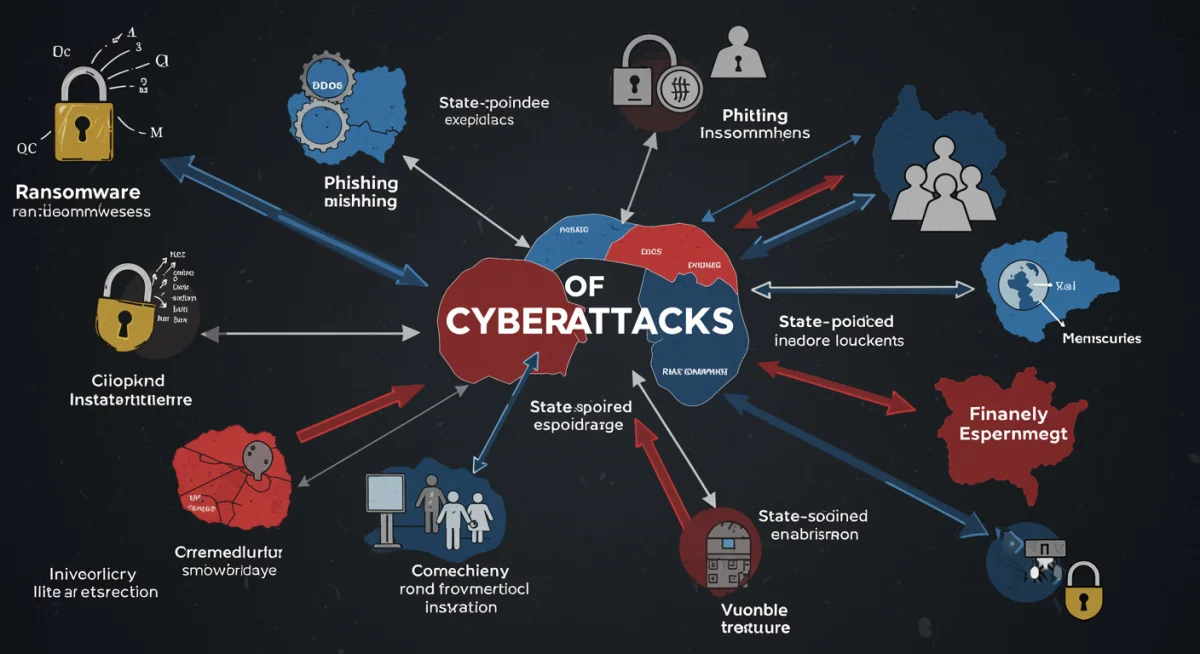
State-sponsored attacks: Often characterized by their sophistication and long-term objectives, these attacks aim to gather intelligence, disrupt critical infrastructure, or influence political outcomes.
Ransomware campaigns: Increasingly targeting essential services and businesses, these attacks encrypt data and demand payment, often leading to significant operational downtime and financial losses.
Supply chain compromises: Exploiting weaknesses in the software supply chain allows attackers to infiltrate numerous organizations through a single point of entry, amplifying their impact.
The complexity of these threats requires a multi-layered defense strategy that extends beyond traditional firewalls and antivirus software. It demands continuous vigilance, threat intelligence sharing, and the development of resilient systems capable of withstanding and recovering from breaches.
In conclusion, the escalating frequency and sophistication of cyberattacks necessitate a comprehensive re-evaluation of our national security posture. Protecting our digital assets is no longer just an IT concern but a fundamental component of national defense, requiring collaboration across government, industry, and academia.
Key Targets and Vulnerable Sectors
The recent surge in cyberattacks has not been evenly distributed across all sectors; instead, specific areas have emerged as prime targets due to their strategic importance or inherent vulnerabilities. Critical infrastructure, government agencies, and vital economic sectors are frequently in the crosshairs, making them priority areas for enhanced cybersecurity measures.
Disrupting these sectors can have cascading effects, impacting public safety, economic stability, and national morale. The interconnectedness of modern systems means that a breach in one area can quickly propagate, creating widespread disruption and complicating recovery efforts.
Critical Infrastructure Under Siege
Critical infrastructure, encompassing sectors like energy, water, transportation, and healthcare, represents a highly attractive target for malicious actors. Attacks on these systems can cause physical damage, disrupt essential services, and even endanger lives. The reliance on legacy systems and the integration of operational technology (OT) with information technology (IT) often create complex attack surfaces that are difficult to secure comprehensively.
For instance, an attack on an energy grid could lead to widespread blackouts, crippling communities and industries. Similarly, a breach in a healthcare system could compromise patient data or disrupt medical services, with severe consequences. Protecting these vital assets requires a specialized approach that addresses both IT and OT vulnerabilities.
Energy Sector: Targeted for potential disruption of power supply and economic destabilization.
Healthcare Facilities: Vulnerable due to sensitive patient data and the critical nature of their services.
Financial Institutions: Constant targets for data theft and monetary fraud, impacting global markets.
Government agencies are also continuously under attack, with adversaries seeking to steal classified information, disrupt operations, or spread disinformation. The sheer volume of data handled by government entities makes them a goldmine for intelligence gathering and sabotage. Furthermore, the defense industrial base, responsible for developing and producing military equipment, is a frequent target for intellectual property theft and espionage.
In summary, identifying and fortifying the most vulnerable sectors is a critical step in bolstering national security against the rising tide of cyber threats. A holistic defense strategy must prioritize these key targets, implementing advanced security measures and fostering resilience.
Attribution Challenges and Geopolitical Implications
One of the most complex aspects of responding to cyberattacks is the challenge of attribution. Pinpointing the exact origin and perpetrator of a digital assault can be incredibly difficult, often involving sophisticated forensic analysis and intelligence gathering. This ambiguity complicates international relations and the ability to mount a proportionate and effective response.
The geopolitical landscape is significantly shaped by these attribution challenges. Without clear evidence, nations are hesitant to openly accuse others, fearing escalation or misdirection. This environment of uncertainty can embolden malicious actors, allowing them to operate with a degree of impunity.
The Fog of Cyber Warfare
Cyber warfare operates in a grey zone, where conventional rules of engagement do not always apply. State-sponsored groups often use proxies or sophisticated techniques to mask their identities, making it hard to distinguish between criminal activity and state-backed aggression. This ‘fog of war’ makes it difficult to deter future attacks or hold perpetrators accountable.
The implications for international diplomacy are profound. Accusations of cyber warfare can strain diplomatic ties, lead to sanctions, and even trigger retaliatory actions. The lack of universally agreed-upon norms and conventions in cyberspace further exacerbates these challenges, creating a volatile environment where miscalculation is a constant risk.
Difficulty in proving intent: Distinguishing between espionage, sabotage, or mere criminal activity is often challenging.
Use of proxies and false flags: Adversaries intentionally obfuscate their tracks, making definitive attribution elusive.
Lack of international consensus: No clear framework exists for classifying cyberattacks as acts of war, complicating responses.
Furthermore, the development of offensive cyber capabilities by various nations creates a complex arms race. While these capabilities are often touted as deterrents, they also increase the risk of accidental escalation or misjudgment. The global community is grappling with how to manage this new dimension of conflict, seeking ways to establish stability and prevent widespread digital chaos.
Ultimately, addressing attribution challenges and navigating the geopolitical implications of cyberattacks requires a concerted international effort. This includes developing shared intelligence capabilities, establishing clear norms of behavior in cyberspace, and fostering greater transparency among nations to mitigate risks and promote stability.
Strengthening Cyber Defenses and Resilience
In the face of escalating cyber threats, strengthening our collective cyber defenses and building resilience are paramount. This involves not only technological advancements but also significant investments in human capital, policy frameworks, and international cooperation. A reactive approach is no longer sufficient; a proactive, adaptive strategy is essential to stay ahead of sophisticated adversaries.
Building resilience means developing the capacity to not only prevent attacks but also to withstand them, recover quickly, and learn from each incident. This holistic approach ensures that even when breaches occur, their impact is minimized, and critical functions can be restored swiftly.
Key Pillars of a Robust Cyber Strategy
A strong cyber strategy rests on several interconnected pillars, each contributing to an overarching defense posture. These pillars must be continuously updated and integrated to address the dynamic nature of cyber threats. It’s a continuous process of improvement, adaptation, and collaboration.
Advanced Threat Intelligence: Sharing timely and actionable intelligence among government agencies, private sector entities, and international partners is crucial for anticipating and mitigating emerging threats.
Zero Trust Architecture: Implementing a ‘never trust, always verify’ model for network access, ensuring that all users and devices are authenticated and authorized before gaining access to resources.
Cyber Workforce Development: Addressing the critical shortage of skilled cybersecurity professionals through education, training, and recruitment initiatives to build a capable defense force.
Beyond these technical and human elements, robust policy frameworks are necessary to guide actions, allocate resources, and establish clear lines of responsibility. This includes regulations that incentivize strong cybersecurity practices, legal frameworks for responding to cybercrimes, and international agreements for cooperation.
Moreover, regular exercises and simulations are vital for testing the effectiveness of defense strategies and identifying areas for improvement. These drills help organizations prepare for real-world scenarios, refine their response protocols, and ensure that personnel are well-trained to handle crises effectively.
In essence, strengthening cyber defenses and resilience is a continuous journey that demands constant innovation, collaboration, and commitment. By investing in these key areas, we can build a more secure digital future and protect our national interests from the escalating threat of cyberattacks.
The Role of Public-Private Partnerships
The complexity and scale of modern cyber threats mean that no single entity, whether government or private sector, can effectively address them alone. Public-private partnerships have emerged as a critical component of a comprehensive national cybersecurity strategy, leveraging the unique strengths and resources of both sectors to create a more resilient defense. These collaborations facilitate information sharing, joint research and development, and coordinated incident response.
The government often possesses intelligence on state-sponsored threats and provides regulatory guidance, while the private sector brings innovation, specialized technical expertise, and direct experience with real-world attacks. Combining these strengths creates a synergistic effect, enhancing overall security capabilities.
Fostering Collaboration for Collective Security
Effective public-private partnerships require trust, clear communication channels, and a shared understanding of common goals. Initiatives that encourage the exchange of threat intelligence, best practices, and innovative solutions are essential for building a unified front against cyber adversaries. These collaborations extend beyond mere data sharing, encompassing joint training exercises, personnel exchanges, and coordinated policy development.
For example, government agencies can provide classified threat intelligence to critical infrastructure operators, enabling them to proactively strengthen their defenses. In return, private companies can share insights into emerging attack vectors and provide feedback on the practical effectiveness of government policies and security guidelines.
Information Sharing and Analysis Centers (ISACs): Industry-specific organizations that facilitate the sharing of cybersecurity threat information among members and with government entities.
Joint Cyber Defense Collaborative (JCDC): A CISA-led initiative bringing together government and private sector partners to plan and execute cyber defense operations.
Research & Development Initiatives: Joint funding and collaboration on developing next-generation cybersecurity technologies and countermeasures.
These partnerships are particularly vital for protecting critical infrastructure, where the consequences of a successful cyberattack can be catastrophic. By working together, public and private entities can pool resources, identify vulnerabilities, and develop robust defenses that are beyond the reach of any single organization.
In conclusion, public-private partnerships are indispensable for building a resilient national cybersecurity posture. By fostering deep collaboration and leveraging diverse expertise, we can create a more secure digital environment capable of withstanding the evolving landscape of cyber threats.
Future Outlook and Proactive Measures
Looking ahead, the trajectory of cyber threats suggests that they will continue to evolve in sophistication and scale. Artificial intelligence and machine learning, while powerful tools for defense, are also being weaponized by adversaries to create more potent and evasive attacks. This necessitates a forward-thinking approach, focusing on proactive measures and continuous innovation to maintain a strategic advantage.
Anticipating future threats and developing capabilities to counter them before they fully materialize is crucial. This involves investing in cutting-edge research, fostering a culture of innovation, and continuously adapting our defense strategies to meet the challenges of tomorrow.
Preparing for Tomorrow’s Cyber Challenges
The future of cybersecurity will likely be defined by the emergence of new technologies and methodologies. Quantum computing, for instance, has the potential to break current encryption standards, requiring a complete overhaul of our cryptographic infrastructure. Similarly, the increasing interconnectedness of devices through the Internet of Things (IoT) will expand the attack surface exponentially, demanding new security paradigms.
Proactive measures include not only technological foresight but also policy innovation and international collaboration. Developing global norms for responsible behavior in cyberspace and establishing clear mechanisms for accountability will be essential for maintaining stability in an increasingly digital world.
Quantum-Resistant Cryptography: Investing in research and development of encryption methods that can withstand attacks from future quantum computers.
AI-Powered Defense Systems: Leveraging AI and machine learning to detect and respond to threats more rapidly and effectively, automating defensive actions.
International Treaties and Norms: Working with global partners to establish clear rules of engagement and accountability for cyber warfare.
Furthermore, educating the public about cybersecurity best practices remains a vital proactive measure. A well-informed populace is less susceptible to phishing, social engineering, and other common attack vectors, thereby strengthening the overall national defense posture from the ground up.
The landscape of national security is inextricably linked to the digital domain. By embracing a proactive posture, investing in future-proof technologies, and fostering broad collaboration, we can build a resilient defense capable of protecting our nation against the evolving and intensifying threat of cyberattacks.
Key Aspect
Brief Description
Cyberattack Surge
A 20% increase in cyberattacks over six months, highlighting escalating digital threats.
Targeted Sectors
Critical infrastructure, government, and finance are primary targets due to strategic importance.
Attribution Challenges
Difficulty in identifying perpetrators complicates responses and international relations.
Proactive Defense
Emphasis on advanced threat intelligence, zero trust, and public-private partnerships.
Frequently Asked Questions About National Cybersecurity
What led to the 20% increase in cyberattacks mentioned in the National Security Briefing?▼
The surge is attributed to a confluence of factors including heightened geopolitical tensions, the widespread availability of sophisticated hacking tools, and an expanded digital attack surface due to rapid technological adoption. Malicious actors, both state-sponsored and criminal, are exploiting these conditions with increased frequency and intensity, targeting critical systems for various motives.
Which sectors are most vulnerable to these escalating cyber threats?▼
Critical infrastructure sectors such as energy, water, transportation, and healthcare are particularly vulnerable. Government agencies, defense contractors, and financial institutions also remain prime targets. These sectors are targeted due to their strategic importance, the sensitive data they handle, and the potential for widespread disruption their compromise could cause.
How does attribution challenge national security responses to cyberattacks?▼
Attribution is challenging because cyber adversaries often use sophisticated techniques to mask their identities and origins, employing proxies or false flags. This ambiguity makes it difficult for nations to confidently identify perpetrators, complicating diplomatic responses, retaliatory actions, and the establishment of clear accountability in international law, thereby potentially emboldening attackers.
What strategies are being implemented to strengthen national cyber defenses?▼
Key strategies include enhancing advanced threat intelligence sharing, implementing Zero Trust architectures, and investing in cyber workforce development. Public-private partnerships, regular defense simulations, and the development of quantum-resistant cryptography are also crucial. These measures aim to create a multi-layered, proactive defense system capable of adapting to evolving threats.
What role do public-private partnerships play in national cybersecurity?▼
Public-private partnerships are vital for collective security. They facilitate essential information sharing, joint research and development, and coordinated incident response. By combining government intelligence and regulatory guidance with private sector innovation and technical expertise, these collaborations create a more robust and resilient cybersecurity posture against complex, large-scale threats that neither sector could effectively address alone.
Conclusion
The recent National Security Briefing: Current Threats Highlighted as Cyberattacks Increase by 20% in Last 6 Months serves as a critical wake-up call, underscoring the urgent need for a fortified and adaptive cybersecurity strategy. The escalating frequency and sophistication of digital threats demand continuous vigilance, significant investment in advanced defense mechanisms, and robust collaboration across all sectors. By prioritizing threat intelligence, strengthening critical infrastructure, and fostering strong public-private partnerships, the nation can build a resilient digital defense capable of safeguarding its interests against the ever-evolving landscape of cyber warfare. The future of national security is inextricably linked to our collective ability to secure the digital realm.