US Labor Market Report: November 2024 Unemployment Steady at 3.9%
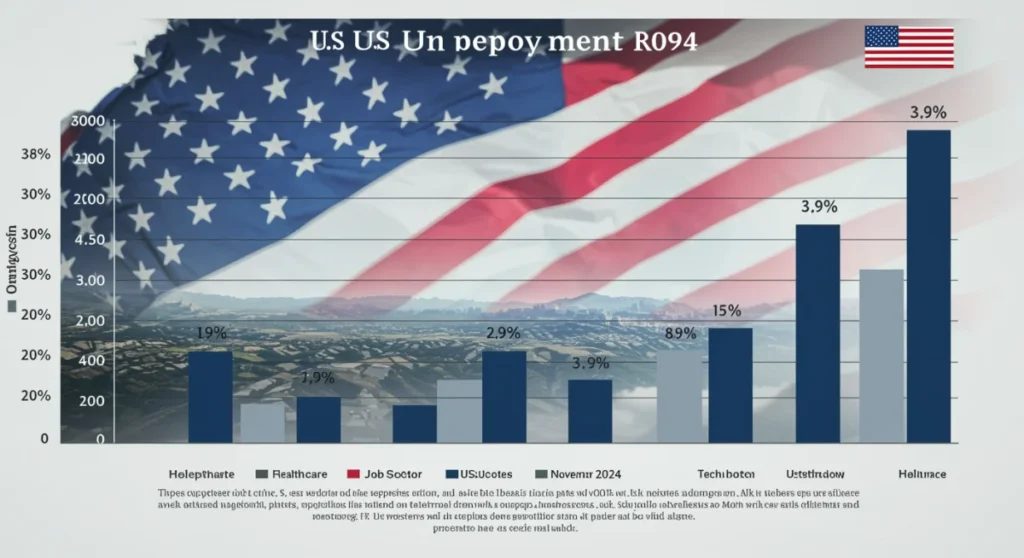
The November 2024 US Labor Market Report indicates a stable 3.9% unemployment rate, reflecting a resilient economy with modest job gains in critical sectors, providing an optimistic outlook for the end of the year.
By: Hugo on January 8, 2026
The November 2024 US Labor Market Report confirms a stable unemployment rate of 3.9%, indicating a resilient economy with targeted growth in key sectors, contributing to overall economic stability.
The latest US Labor Market Report for November 2024 has been released, providing a comprehensive snapshot of the nation’s economic health. This report confirms a steady unemployment rate holding at 3.9%, a figure that offers both reassurance and prompts deeper analysis into the underlying trends shaping the American workforce. Understanding these dynamics is crucial for businesses, policymakers, and individuals alike as we navigate the evolving economic landscape.
Understanding the Steady Unemployment Rate
The consistent 3.9% unemployment rate in November 2024 is a significant indicator of the current state of the US economy. This stability suggests a labor market that is neither rapidly expanding nor contracting, but rather maintaining a delicate balance amidst various economic pressures. It reflects a period where job availability is generally meeting the demand from those actively seeking employment, without creating excessive tightness or widespread slack.
Historically, an unemployment rate near 4% is often considered close to full employment, implying that most individuals who want to work can find jobs. This stability, however, doesn’t tell the whole story; it’s essential to dissect the nuances within this headline figure to understand what it truly means for different segments of the workforce and the broader economic outlook. Factors such as labor force participation rates, underemployment, and discouraged workers can influence the real picture.
What a Stable Rate Implies
Economic Resilience: A steady rate suggests the economy is robust enough to absorb new entrants into the workforce and avoid significant job losses.
Inflationary Pressures: A stable, low unemployment rate can sometimes indicate potential inflationary pressures as employers compete for talent, potentially driving up wages.
Consumer Confidence: Consistent employment figures generally bolster consumer confidence, which is vital for spending and economic growth.
The steadiness of the unemployment rate also provides a foundation for future economic planning. Businesses can make investment decisions with greater certainty, and individuals can plan their careers and finances with more confidence. This predictability is a valuable asset in an often-volatile global economic environment, allowing for more strategic long-term perspectives.
Key Sectors Showing Modest Growth
While the overall unemployment rate held steady, a deeper dive into the November 2024 report reveals that several key sectors experienced modest job growth. This targeted expansion is a testament to the diverse nature of the US economy, where different industries respond to varying market demands and technological advancements. These growth areas are often indicative of evolving consumer needs, technological innovation, and strategic investments.
Understanding which sectors are growing is crucial for job seekers, educators, and policymakers. It helps identify areas of opportunity, guides educational and vocational training programs, and informs economic development strategies. The growth, while modest, is significant because it indicates underlying strength and adaptation within specific parts of the economy, preventing a stagnant overall picture.
Leading Industries in Job Creation
Healthcare: Continued demand for medical services, an aging population, and advancements in healthcare technology fuel consistent job growth.
Technology: Despite some fluctuations, the tech sector, particularly in areas like AI, cybersecurity, and cloud computing, continues to add jobs.
Manufacturing: A modest resurgence in domestic manufacturing, driven by supply chain resilience efforts and government incentives, contributed to employment gains.
Professional and Business Services: This broad category, encompassing consulting, administrative support, and scientific research, consistently sees growth as businesses outsource specialized tasks.
These sectors often represent high-skill, high-wage opportunities, contributing disproportionately to economic output and innovation. The sustained growth in these areas suggests a forward-looking economy, investing in human capital and technological advancement. It also highlights the importance of continuous skill development for the modern workforce.
Analyzing Labor Force Participation and Wages
Beyond the headline unemployment rate, the US Labor Market Report also provides critical insights into labor force participation and wage growth. These metrics offer a more nuanced understanding of the health and dynamics of the workforce. Labor force participation, which measures the proportion of the population that is either employed or actively looking for work, indicates the overall engagement of the working-age population in the economy.
Wage growth, on the other hand, is a key indicator of inflationary pressures and the purchasing power of consumers. While steady employment is positive, stagnant wages can erode living standards, whereas robust wage growth can fuel economic expansion but also lead to higher inflation. The November 2024 report delves into these figures, revealing a mixed but generally stable picture.
Key Trends in Participation and Earnings
The labor force participation rate remained relatively stable, suggesting that individuals who had left the workforce during previous economic shifts have largely either returned or found other avenues. This stability is crucial for ensuring a sufficient supply of workers to meet employer demands without creating significant labor shortages. A healthy participation rate is often a sign of a confident workforce.
Wage growth continued at a moderate pace, which is a delicate balance. It’s enough to provide some relief to workers facing rising costs of living, but not so rapid as to significantly exacerbate inflationary pressures. This measured growth reflects a labor market that is adjusting to current economic conditions, finding equilibrium between employer needs and worker expectations.
Participation Stability: The labor force participation rate held steady, indicating a consistent pool of available workers.
Moderate Wage Growth: Average hourly earnings saw a modest increase, supporting consumer spending power without fueling significant inflation.
Demographic Shifts: Underlying demographic changes continue to influence participation rates, with some older workers re-entering or delaying retirement.
These trends collectively paint a picture of a labor market that is adapting rather than undergoing radical shifts. The balance between participation and wage growth is vital for sustainable economic expansion, ensuring that the benefits of employment are broadly shared while maintaining price stability.
Regional Disparities and Local Market Insights
While national averages provide a broad overview, the US Labor Market Report often reveals significant regional disparities. Economic conditions are rarely uniform across the vast and varied landscape of the United States. Different states and metropolitan areas experience unique challenges and opportunities, influenced by local industries, demographic trends, and policy decisions. Understanding these localized insights is crucial for a complete picture of the labor market.
For November 2024, the report highlighted how certain regions are outperforming others in job creation, while some continue to grapple with higher unemployment rates or slower growth. These differences underscore the importance of tailored economic development strategies and targeted interventions. A one-size-fits-all approach is often ineffective when dealing with such diverse regional economies.
Variations Across States and Cities
States with a strong presence in the growing sectors, such as technology hubs or healthcare-intensive regions, generally reported lower unemployment rates and more robust job gains. Conversely, areas heavily reliant on industries facing structural challenges or undergoing significant automation might experience higher unemployment or slower recovery. These localized trends are often more impactful for residents than the national average.
For instance, some states in the South and West continued to see strong population growth and corresponding job expansion, particularly in construction and service industries. In contrast, certain industrial heartland states focused on traditional manufacturing might be experiencing slower, more concentrated job growth as they adapt to new technologies and global competition.
Tech Hubs Thrive: Cities with strong technology ecosystems continued to attract talent and create high-paying jobs.
Sun Belt Expansion: States in the Sun Belt experienced notable growth in population and diverse job sectors.
Rural Challenges: Many rural areas still face challenges in job creation and maintaining a skilled workforce.
Policy Impact: Local and state policies on business incentives, education, and infrastructure play a significant role in regional labor market performance.
These regional insights are not just statistical curiosities; they inform decisions about where to invest, where to build new infrastructure, and where to focus educational resources to meet future labor demands. The patchwork nature of the US labor market necessitates a granular approach to economic analysis and planning.
Impact on Monetary Policy and Economic Outlook
The stability reflected in the November 2024 US Labor Market Report has significant implications for monetary policy and the broader economic outlook. Central banks, particularly the Federal Reserve, closely monitor employment data as a key input for their decisions on interest rates and other policy tools. A steady unemployment rate, coupled with modest wage growth, provides a complex signal for policymakers trying to balance inflation control with economic growth.
The current report suggests that the economy is neither overheating nor on the brink of recession, allowing for a more measured approach to monetary adjustments. This stability can provide the Federal Reserve with greater flexibility, enabling them to observe further data before making drastic changes. The economic outlook, therefore, remains cautiously optimistic, but with an awareness of ongoing global and domestic challenges.
Federal Reserve’s Stance and Future Projections
A stable unemployment rate near full employment, combined with moderate wage increases, suggests that the Federal Reserve might continue its current wait-and-see approach. They are likely looking for sustained evidence of inflation moving towards their target levels before considering any significant shifts in interest rates. This period of stability can be seen as a window for the economy to absorb previous policy actions.
Economists and market analysts will scrutinize future reports for any signs of acceleration or deceleration in job growth and wage inflation. The sustained health of the labor market is a critical component in avoiding a hard landing for the economy, providing a buffer against external shocks. Projections for the coming months often hinge on the continued resilience of the job market.
Policy Stability: The steady labor market may encourage the Federal Reserve to maintain its current monetary policy stance.
Inflation Watch: Policymakers will continue to monitor wage growth for signs of accelerating inflation.
Growth Forecasts: A stable labor market underpins positive, albeit modest, economic growth forecasts for the near future.
Global Factors: International economic developments and geopolitical events will also influence the Fed’s decisions, alongside domestic labor data.
The interplay between labor market data and monetary policy is a delicate dance, where each report provides another piece of the puzzle. The November 2024 report offers a picture of underlying strength, giving policymakers some breathing room but also maintaining vigilance against potential imbalances.
Challenges and Opportunities in the Evolving Workforce
Even with a steady unemployment rate, the US Labor Market Report for November 2024 highlights ongoing challenges and emerging opportunities within the evolving workforce. The nature of work itself is changing rapidly, driven by technological advancements, demographic shifts, and new societal expectations. These transformations present both hurdles for workers needing to adapt and chances for businesses to innovate and grow.
Addressing these challenges and capitalizing on opportunities requires proactive strategies from individuals, employers, and educational institutions. From skill gaps to the rise of remote work, the labor market is in a constant state of flux, demanding flexibility and continuous learning. The report implicitly points to areas where investment in human capital and infrastructure can yield significant returns.
Navigating the Future of Work
One of the persistent challenges is the skill gap, where available jobs require skills that many job seekers lack. This mismatch can occur even in a seemingly stable labor market, leading to unfilled positions in high-demand sectors while other areas experience surplus labor. Educational and vocational training programs are crucial in bridging this gap, ensuring that the workforce possesses the competencies needed for future roles.
The rise of artificial intelligence, automation, and digital transformation also continues to reshape job functions. While some roles may be automated, new ones are created, often requiring advanced analytical and technical skills. This necessitates a focus on reskilling and upskilling initiatives to keep the workforce competitive and adaptable to these technological shifts.
Skill Gap: A disparity between available skills and employer needs remains a significant challenge.
Automation Impact:AI and automation continue to transform job roles, requiring workforce adaptation.
Remote Work Trends: The ongoing shift towards hybrid and remote work models impacts office space demand and geographic flexibility for employees.
Diversity and Inclusion: Efforts to create more diverse and inclusive workplaces are gaining traction, fostering broader talent pools.
These challenges also bring opportunities. Companies that embrace new technologies and invest in their employees’ development are better positioned for long-term success. For individuals, a focus on lifelong learning and adaptability can open doors to new career paths. The evolving workforce demands a dynamic and collaborative approach from all stakeholders to thrive.
Preparing for Future Labor Market Shifts
Looking beyond the immediate figures of the November 2024 US Labor Market Report, preparing for future labor market shifts is paramount. The economy is a dynamic entity, constantly influenced by technological innovation, global events, demographic changes, and policy decisions. Proactive planning and strategic foresight are essential for individuals, businesses, and governments to navigate these upcoming transformations successfully.
Understanding potential future trends allows for better resource allocation, targeted educational initiatives, and adaptable business strategies. The stability seen in the current report provides a valuable window to implement these preparatory measures, ensuring continued economic resilience and sustained prosperity. Ignoring these long-term shifts could lead to significant disruptions in the labor market.
Strategies for Adaptation and Growth
For individuals, continuous learning and skill development are no longer optional but essential. Investing in certifications, pursuing higher education, or simply staying abreast of industry trends can significantly enhance employability and career longevity. The concept of a static career path is increasingly outdated; adaptability is the new currency in the labor market.
Businesses must also evolve their talent management strategies. This includes fostering a culture of continuous learning, embracing flexible work arrangements, and investing in technologies that augment human capabilities rather than simply replacing them. Attracting and retaining top talent in a competitive environment will require innovative approaches to employee engagement and development.
Lifelong Learning: Individuals must commit to continuous skill acquisition to remain relevant.
Talent Development: Businesses need to invest in reskilling and upskilling their existing workforce.
Policy Support: Government policies can facilitate adaptation through funding for training programs and supporting emerging industries.
Technological Integration: Embracing AI and automation as tools for productivity, not just cost-cutting, will be key.
Ultimately, the future of the labor market is a shared responsibility. By working together, individuals, educators, businesses, and policymakers can create a robust and adaptable workforce ready to meet the challenges and seize the opportunities of tomorrow. The current stability offers a solid foundation upon which to build these future-proof strategies.
Key Metric
November 2024 Finding
Unemployment Rate
Held steady at 3.9%, indicating market stability.
Key Sector Growth
Modest job gains in healthcare, technology, manufacturing, and business services.
Wage Growth
Continued at a moderate pace, balancing purchasing power and inflation concerns.
Labor Force Participation
Remained relatively stable, showing consistent workforce engagement.
Frequently Asked Questions About the Labor Market Report
What does a 3.9% unemployment rate signify for the US economy?▼
A 3.9% unemployment rate suggests a robust and stable labor market, often considered near full employment. It indicates that most people seeking jobs can find them, reflecting economic resilience without excessive pressure on wages that could fuel inflation.
Which key sectors showed growth in the November 2024 report?▼
The November 2024 report highlighted modest job growth in several key sectors, including healthcare, technology, manufacturing, and business services. These areas often drive innovation and respond to evolving consumer and business demands.
How does this report impact the Federal Reserve’s monetary policy?▼
A stable labor market with moderate wage growth likely provides the Federal Reserve with flexibility. It suggests they might maintain their current monetary policy stance, closely monitoring inflation without immediate pressure for drastic interest rate changes.
What are the main challenges facing the US labor market?▼
Key challenges include persistent skill gaps between available jobs and worker competencies, the ongoing impact of automation and AI on job roles, and adapting to new work models like remote and hybrid arrangements. Continuous upskilling is crucial.
What is the importance of labor force participation in this report?▼
Labor force participation indicates the proportion of the working-age population actively engaged in the economy. Its stability in the November 2024 report suggests a consistent supply of workers, which is vital for meeting employer demands and sustaining economic growth.
Conclusion
The November 2024 US Labor Market Report paints a picture of a resilient and stable economy, with the unemployment rate holding steady at 3.9%. This consistency, coupled with modest job growth in key sectors like healthcare and technology, suggests a labor market that is adapting to current economic conditions. While challenges such as skill gaps and the evolving nature of work persist, the report offers a foundation for cautious optimism. The stability provides crucial insights for policymakers, businesses, and individuals alike, guiding strategic decisions and fostering preparedness for future economic shifts. The American workforce continues to demonstrate its capacity for adaptation and growth, underpinning the nation’s economic stability.